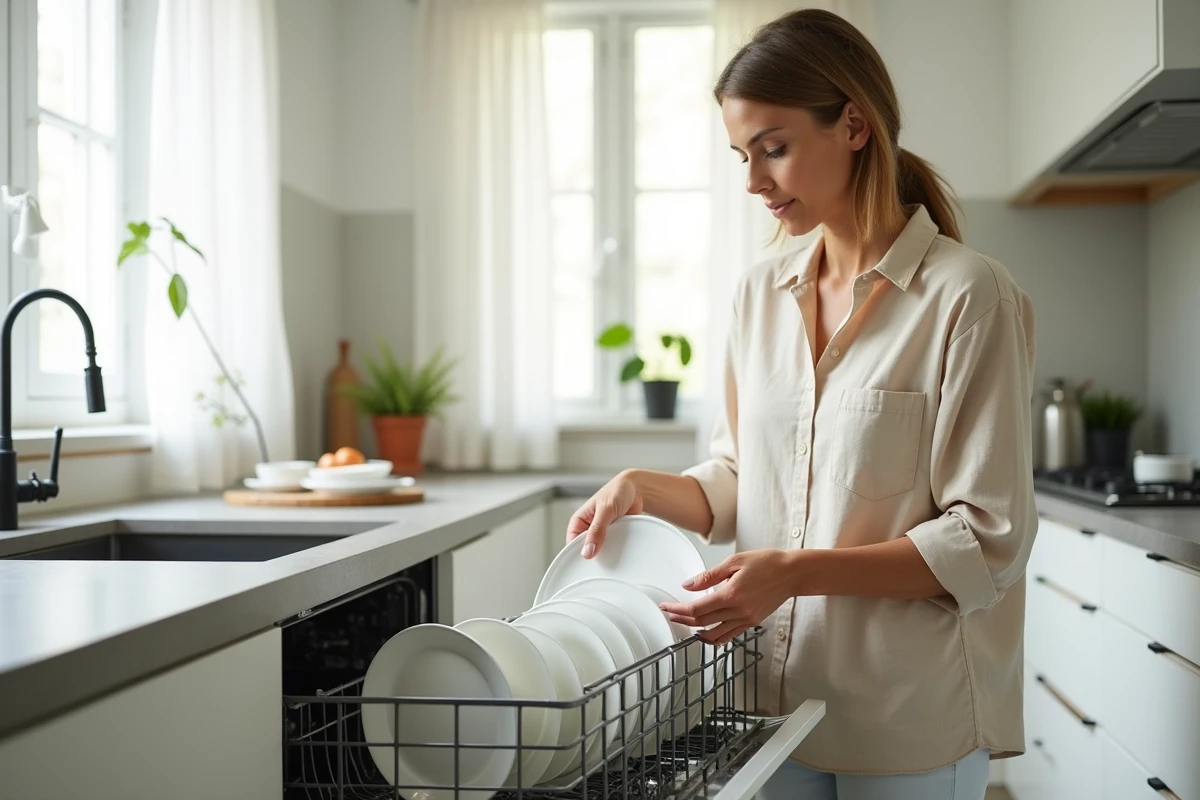
Does porcelain go in the dishwasher without damage? The answer depends on the type of porcelain, the cycle chosen, and the detergent used. Three variables that, combined, produce very different results on the glaze, decorations, and longevity of the pieces.
Temperature, pressure, and detergent: what really damages porcelain in the dishwasher
The dishwasher subjects dishes to three simultaneous stresses: heat, water jet pressure, and the chemical action of the detergent. On modern undecorated porcelain, fired at very high temperatures, these factors have only a marginal short-term effect.
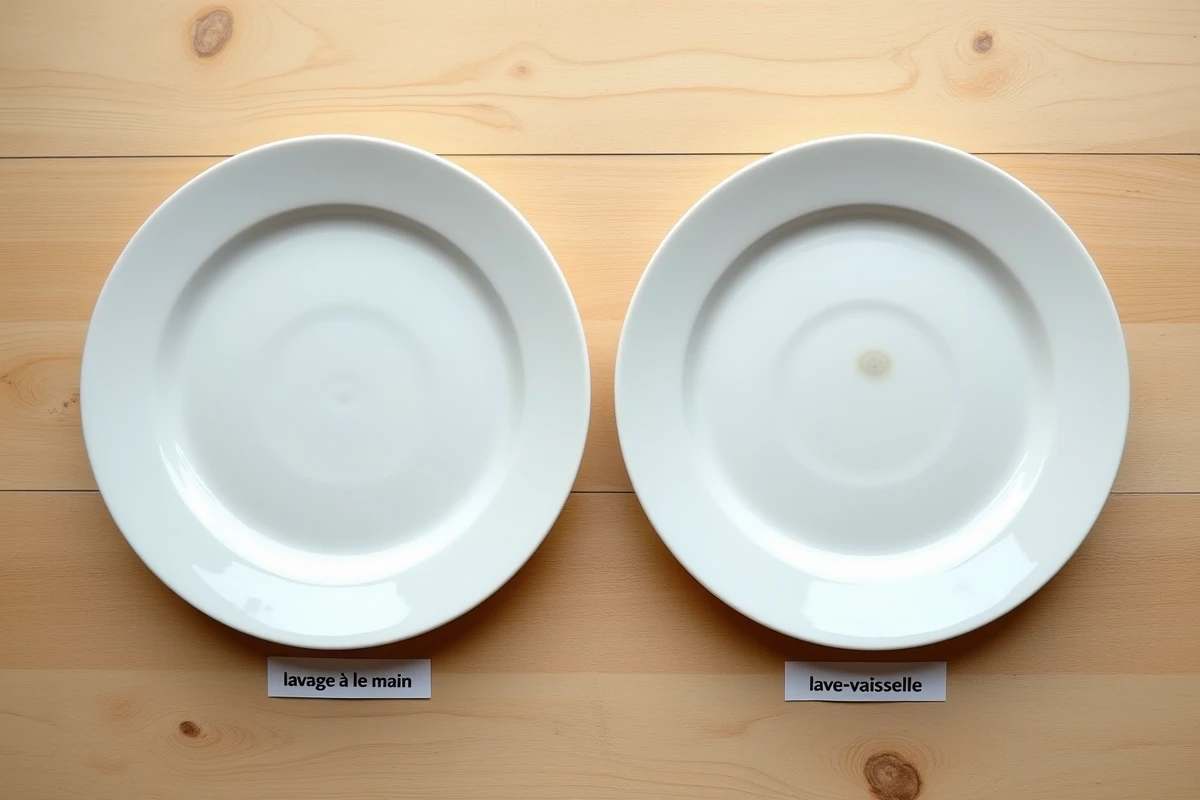
The problem arises with the latest generation “all-in-one” detergents. Comparative tests conducted by European consumer associations between 2021 and 2024 documented an increase in micro-wear of the glaze and shine on porcelain after repeated washes, including on pieces labeled dishwasher safe. The main cause: the concentration of alkaline agents and enzymes, designed to remove cooked fats, also attacks glazed surfaces in the long term.
Reducing the amount of detergent and opting for a low-temperature program limits these effects. When it comes to porcelain in the dishwasher, the distinction between “compatible” and “without consequence” becomes significant after several hundred cycles.
White porcelain, gilding, or colored trim: a comparison of wash resistance
Not all porcelains react the same way. The table below summarizes the differences in behavior according to the type of decoration and firing.
| Type of porcelain | Dishwasher compatibility | Main risk | Precaution |
|---|---|---|---|
| Modern white porcelain (high-fired) | Yes, standard cycles | Long-term micro-wear with aggressive detergents | Reduce dosage, avoid intensive cycles |
| Porcelain with under-glaze decorations | Yes, gentle cycles | Gradual dulling of colors | Glass/fragile program |
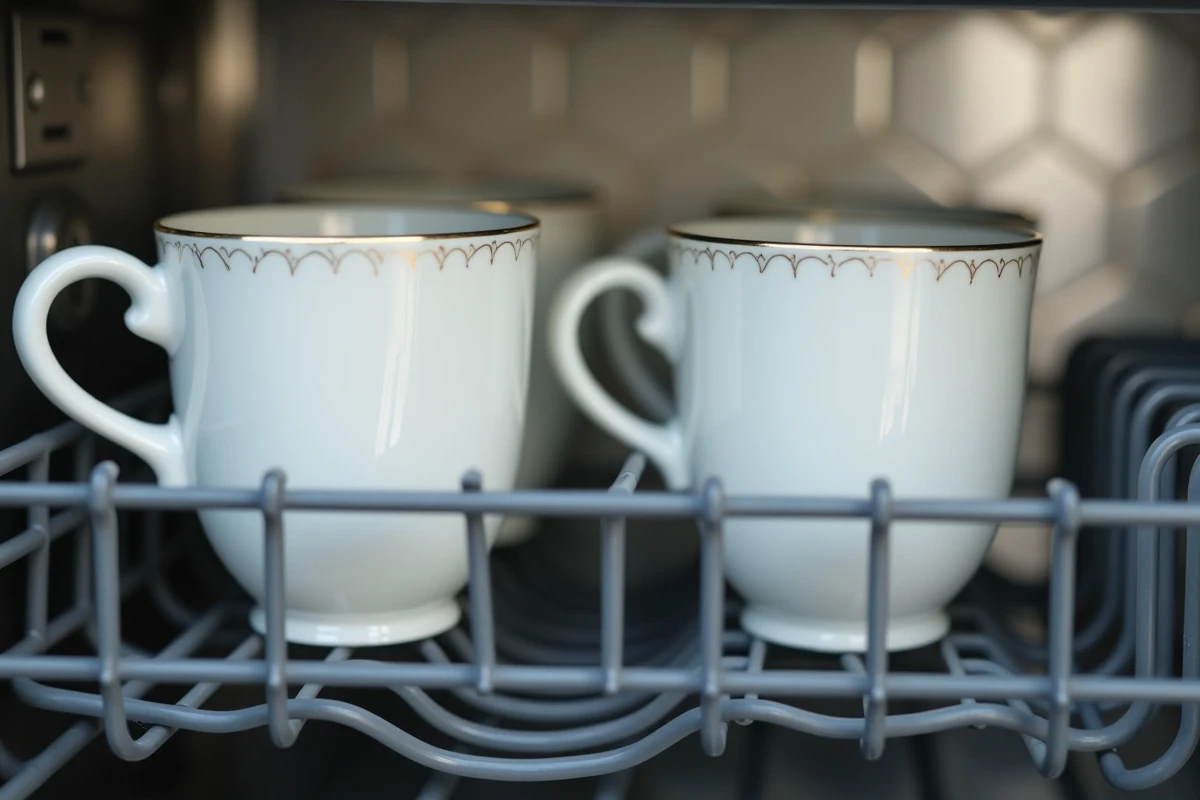
| Porcelain with gilding or metallic trim | Not recommended | Irreversible fading of the gold or platinum decoration | Hand wash only |
| Antique hand-painted porcelain | No | Loss of decoration, cracks in the old glaze | Hand wash, lukewarm water, no prolonged soaking |
Major high-end porcelain brands (Villeroy & Boch, Rosenthal, Royal Copenhagen) now distinguish in their collections lines guaranteed dishwasher safe and others where machine washing voids the decoration warranty. Checking the manufacturer’s product sheet remains the most reliable action before any purchase.
Gilding and trim: why the risk is irreversible
Gilding applied on glaze (and not under glaze) is the most vulnerable. Gold or platinum, applied in a thin layer after the main firing, do not withstand repeated chemical abrasion. A single intensive cycle can be enough to dull a gold trim, and the damage cannot be repaired.
In contrast, white porcelain fired above 1,200 °C has a dense vitrified surface that tolerates standard cycles well. The composition of the decoration determines compatibility, not the quality of the porcelain itself.
“Glass and fragile” programs of dishwashers: a real advancement for porcelain
Several dishwasher manufacturers have introduced programs specifically tested on decorated porcelain. Miele, Bosch, and Siemens mention in their recent manuals that their glass/fragile cycles reduce temperature and water pressure to preserve sensitive pieces.
These programs generally operate at moderate temperatures, with lower jet pressure than a normal cycle. The washing time is extended to compensate for the decrease in mechanical and thermal power.
- Reduced temperature compared to standard cycles, limiting thermal aggression on decorations and glaze
- Decreased water pressure, reducing the risk of collisions between pieces during washing
- Lower temperature drying, avoiding micro-cracks related to sudden thermal changes
These cycles do not turn gilded porcelain into machine-compatible pieces. They protect modern decorated porcelain under glaze, not those with surface decorations.
Arrangement of pieces in the basket
The mechanical shock between two plates or two cups remains a frequent cause of micro-chips. Spacing the pieces and securing them to avoid any direct contact during the cycle reduces this risk. Cups should be placed tilted, opening down, without stacking.
Porcelain maintenance: what the dishwasher cannot replace
Even with an appropriate program, certain maintenance actions extend the lifespan of pieces far beyond what the machine alone allows.
- Quickly rinse acidic residues (tomato, lemon, vinegar) before machine washing, as they can attack the glaze if the dishes wait several hours
- Avoid soaking porcelain in water for hours, especially older pieces whose ceramic body may be slightly porous
- Alternate machine washing and hand washing for decorated pieces to slow cumulative wear of the detergent on the patterns
- Store plates with a felt or fabric separator to avoid contact scratches
A mixed maintenance approach (machine for everyday use, hand for fragile decorations) offers the best compromise between practicality and preservation. Modern white pieces can withstand almost daily machine use. Decorated or antique pieces benefit from hand washing, even if the label indicates compatibility.
The key takeaway: it is not the porcelain that breaks in the dishwasher, it is the decoration that fades. Identifying the type of finish of your pieces before choosing the washing method remains the most effective precaution, well before selecting the program or detergent.