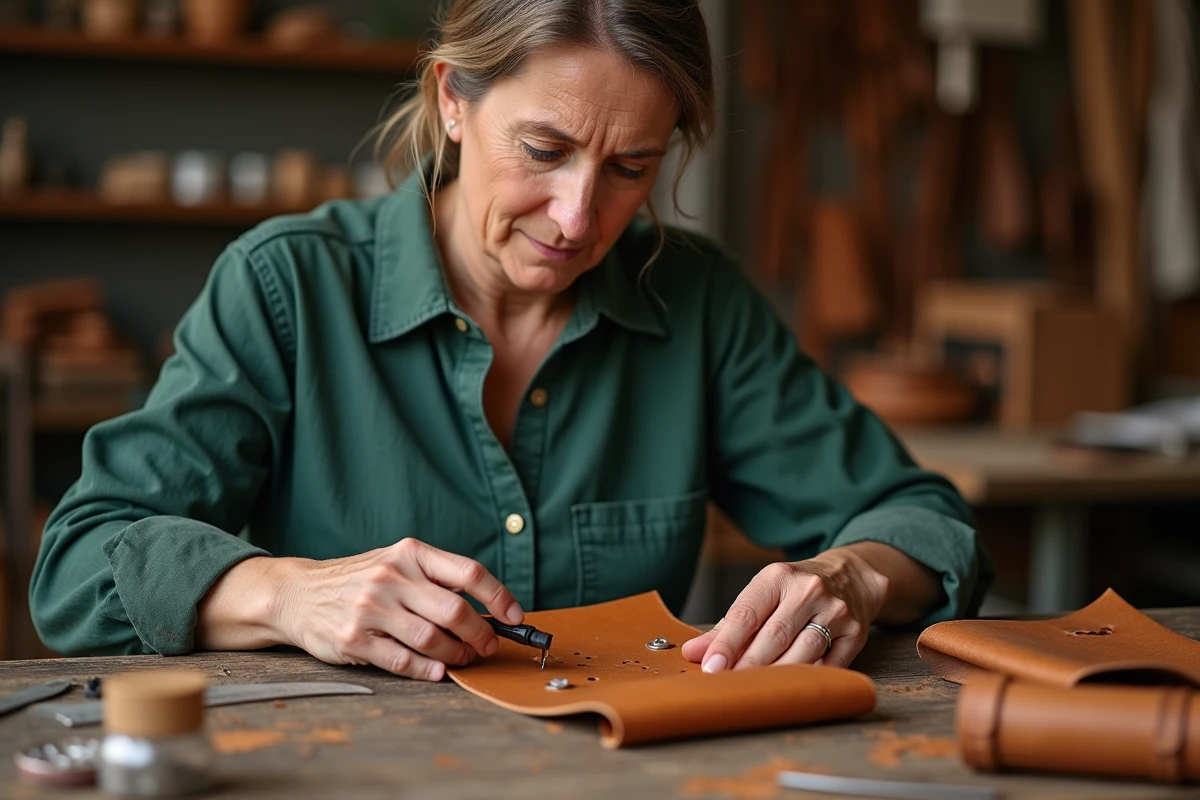
A dull punch can ruin full-grain leather in seconds, while a well-sharpened tool ensures a clean and precise hole. The pressure applied is not always enough: the thickness of the leather, surface preparation, and choice of diameter all play a crucial role.
Some artisans prefer a hole punch for small diameters, while others opt for an awl or lever press depending on the rigidity of the material. The finishing touches after drilling, often overlooked, influence the strength of the lacing and the final aesthetics of the piece.
Understanding the specifics of leather before drilling: what you need to know to avoid common mistakes
Leather, a living material, does not forgive: even the slightest mistake can be costly. Knowing the difference between cowhide, full grain, split leather, or vegetable tanning is already putting the odds in your favor. Sturdy leather, such as cowhide or buffalo, can withstand a well-measured force and requires a flawless blade. In contrast, a thinner skin, like goat or lamb, is easy to pierce but remains fragile: if tension or moisture control is rushed, tearing is never far away.
Adjust the hole size to the objective: lacing point on a bag, clean perforation for a belt, precise adjustment for a strap. A hole that is too wide weakens the piece; one that is too tight complicates the assembly. In the world of leather, precision is not a detail; it is the showcase of craftsmanship.
Take the time to spot every flaw: scar, crease, variation in thickness. Drilling hastily in a fragile area condemns the piece to a short life. The leather perforation techniques detailed on Zazie Web emphasize preparation: a flat surface, precise marking, verified alignment. Whether you are a beginner or already master the craft, each step prepares for success.
To avoid missteps, here are the points to check before any perforation:
- Analyze the nature of the leather: full grain, split, cowhide…
- Select the appropriate hole size for your project
- Avoid risky areas: thin edges, veins, scars
Creating a perfect hole is not left to chance. Following the logic of the material and respecting its specifics is what distinguishes an ordinary piece from a memorable work.
What tools and techniques ensure precise holes suitable for each project?
Here, there is no room for improvisation. Leather demands method and consistency: drilling cleanly requires the right tools, used for the right task. The hole punch does the job on thin leathers, perfect for a belt or bracelet. It easily adjusts to vary the hole size from 2 to 4.5 mm without forcing. But for thick leather or a refined finish, nothing beats the tubular punch paired with a mallet: the cut is clean, and the respect for the material is total.
For those aiming for precision until the end, a marking compass and metal ruler ensure alignment, whether on a shoulder strap, case, or thong. Also consider the cutting mat: it absorbs shocks and preserves the blade, preventing deformation. In leather craftsmanship, neglecting these steps risks an irregular result that quickly betrays a lack of attention.
Here are the tools to prioritize for each step of drilling:
- Hole punch: for regular and quick holes in soft leathers
- Tube punch: for thick materials and demanding finishes
- Marking compass and ruler: for precise marking and alignment
- Cutting mat: to ensure clean edges without burrs
Each tool has its role. Adapting the size according to the project—belt, bag, strap—changes everything. To achieve a series of perfectly regular holes, combine pre-marking, constant pressure, and assured movement. Regularity comes with experience; quality comes from the attention paid to every detail.
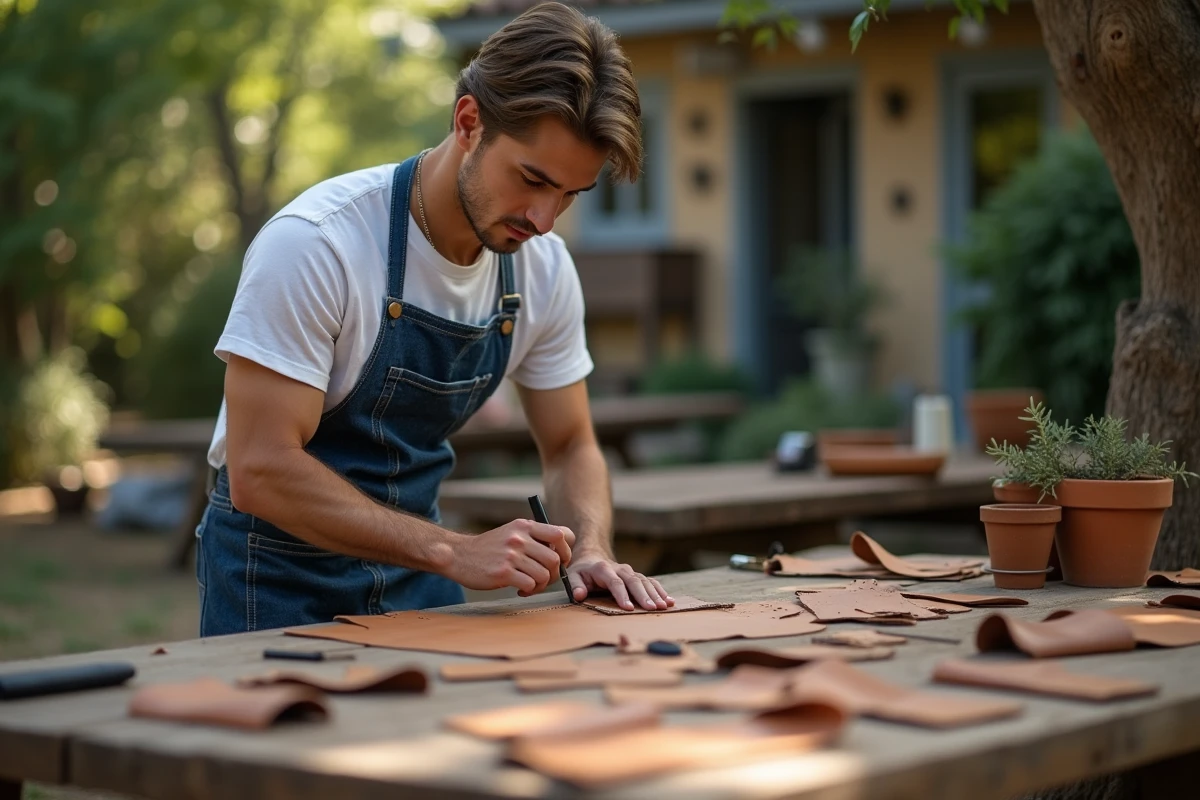
Finishing, lacing, and maintenance: essential steps after perforation for a professional result
Once the holes are made, everything hinges on the care given to the finishes. The edges, sometimes irregular, deserve to be smoothed: use an awl or a small abrasive tool to erase every imperfection. This gesture brings true clarity and gives the leather that hallmark of fine craftsmanship, especially on vegetable-tanned leathers.
For lacing or sewing, choose a waxed thread or lace suitable for the texture. Regular spacing, achieved from the perforation, facilitates the passage of the thread, reduces tension, and ensures durability over time. Whether it’s a belt, pouch, or strap, hand sewing increases the value of the work, appreciated by lovers of unique pieces.
Maintenance follows the same logic. Applying a leather conditioner, without excess, protects the material against drying and the marks of time. Avoid chemical products: favor natural grease or specific cream, especially around the holes, which are often subjected to tough conditions. Thus, each piece retains its flexibility, shine, and character, true to the spirit of craftsmanship.
Mastering leather perforation means offering each creation the possibility to endure through the years without weakening, from the first belt to the masterpiece that is remembered for a long time.