Opening a shopping app on a Monday morning and encountering an avalanche of contradictory micro-trends is the daily life of anyone trying to evolve their wardrobe without filling it with unnecessary pieces. Current fashion sends mixed signals: on one side, there’s the unapologetic maximalism, and on the other, a search for sustainability. Understanding what truly deserves a place in a wardrobe requires sorting, and quickly.
Fabrics and everyday comfort: what labels really change
There’s a lot of talk about cuts and colors, but rarely about the fabric we’ll wear for eight hours straight. Consumer feedback converges on one point: the material determines how many times a garment is worn. A wrinkled linen looks good in photos, but it requires precise care. A technical jersey holds up well at the office as well as on the go.
For the spring-summer season, collections are multiplying cotton-lyocell blends, which are more fluid and less prone to pilling than pure cotton. Brands that focus on versatility, especially in pants and lightweight jackets, are responding to a real demand: buy less, wear more often.
On the fashion section of News Quirk, you can find selections that intersect trend and practicality, helping to filter out the ambient noise of social media.
- Lyocell and Tencel offer a drape similar to silk with standard machine care, making them suitable for everyday pieces.
- Compact knit jerseys withstand repeated washes better than loose knits, a criterion to check before buying a basic item.
- Linen-cotton blends maintain the textured appearance of linen while limiting excessive wrinkling, a good compromise for mid-season jackets.
Current fashion and second-hand: balancing trend and lifespan
Second-hand is no longer a niche. Resale platforms have consolidated, and major luxury players are now incorporating the circular economy into their strategy. This shift changes the way we think about a purchase.
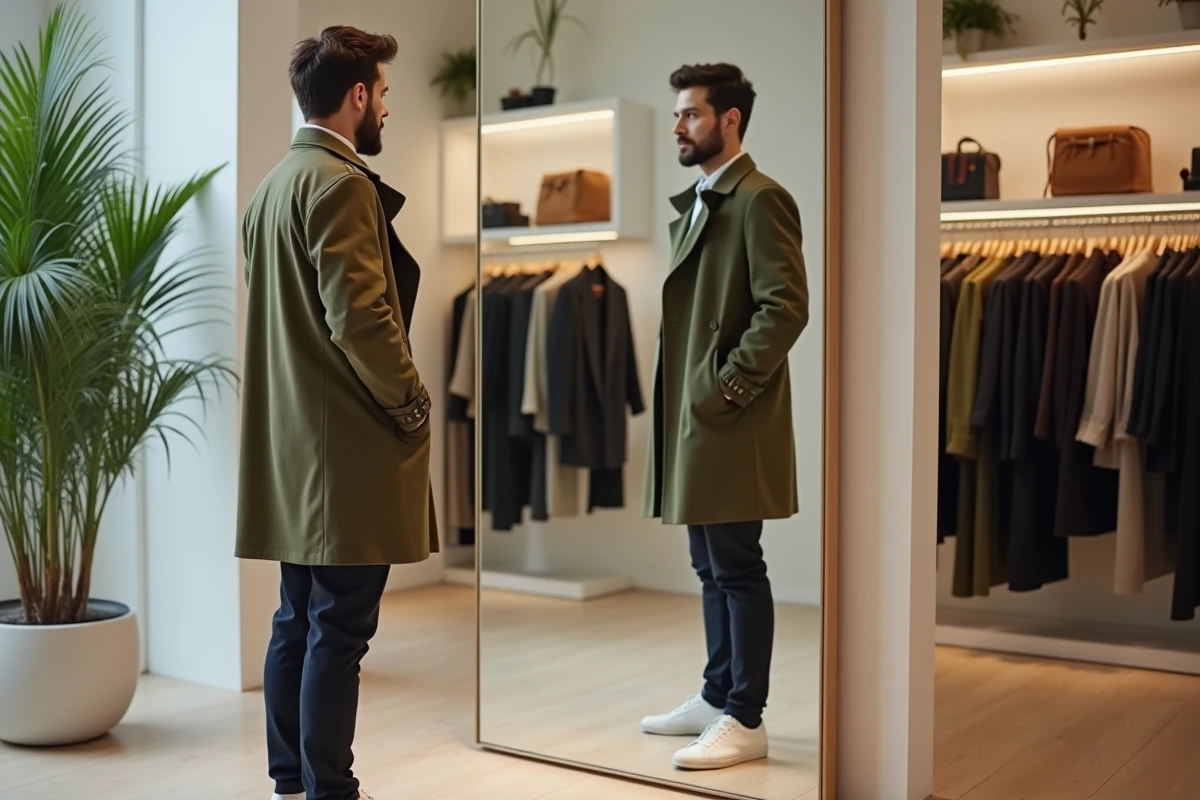
When buying a trendy piece, the useful question is no longer “is it fashionable?” but “will I be able to resell it or keep it for three seasons?” A dress with a strong print loses resale value as soon as the next season. A well-cut blazer in a neutral color, on the other hand, retains its appeal.
Feedback varies on this point, but a practical rule works: if you hesitate between two pieces at the same price, choose the one whose cut transcends seasons. Personal style is built on these repeated choices, not on an isolated impulse.
Trendy colors and resale: a direct link
Bold shades are making a comeback after several seasons dominated by “quiet luxury” and its subtle beiges. We’re seeing more red, cobalt blue, and butter yellow in recent presentations.
For a well-functioning wardrobe, limiting bright colors to one or two accessories (bag, belt, scarf) allows you to follow the trend without devaluing the rest of your wardrobe. Strongly colored pieces work better on a short rotation, bought second-hand and resold at the end of the season.
Building a cohesive look without multiplying purchases
The classic reflex is to look for “the” complete look on a mannequin and replicate it all. In practice, this is expensive, and the result often appears artificial. You get a better outcome by starting with a single statement piece and building around it.
A good look relies on a controlled contrast between a statement piece and understated basics. For example, a wide beige linen pant paired with a structured top in a bolder color is enough to create a readable silhouette. Adding a third notable element muddles the message.
Accessories: the most cost-effective lever in the wardrobe
Accessories increasingly dictate the overall look. A medium-sized bag, geometric earrings, or a pair of block-heeled sandals can transform a basic outfit into a polished ensemble.
- Favor accessories made from durable materials (full-grain leather, brushed metal) rather than fancy finishes that chip after a few uses.
- Focus on one or two accessories per outfit, no more, to maintain a clear silhouette.
- Choose versatile formats (shoulder and hand-held bags, reversible belts) that adapt to multiple styles without needing to buy more.
Effective fashion monitoring: where to search without drowning
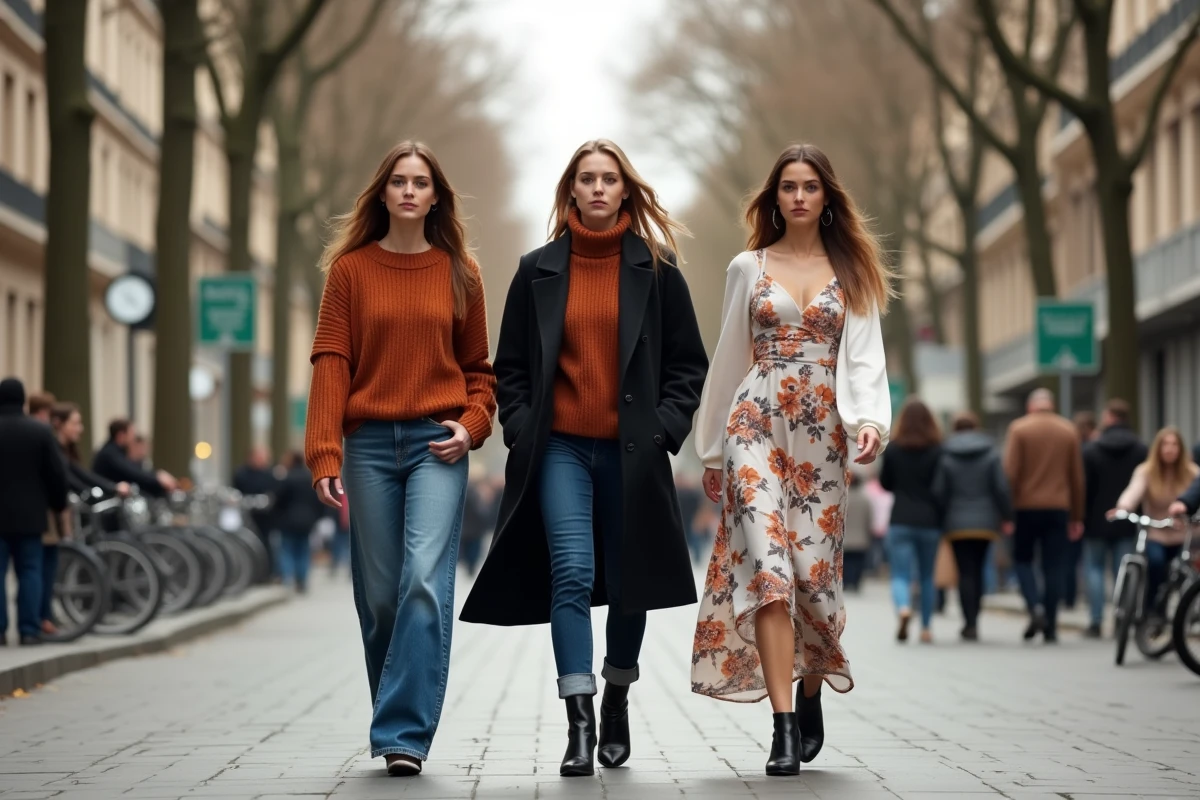
The TikTok or Instagram feed gives the impression that everything changes every week. In reality, the major style directions are decided twice a year, during Fashion Weeks, and then gradually disseminated. The rest is noise.
To stay informed without spending hours, you can focus on two or three complementary sources: a specialized media outlet that deciphers runway shows, a social media account focused on street style, and a resale platform to observe what is actually selling. This trio covers downward trends (runways), upward trends (street), and market validation (resale).
Professional trend books, used by stylists and textile designers, remain the most reliable source for anticipating upcoming directions. Their content eventually filters into collections accessible to the general public with a delay of a few months.
Adapting your style to current fashion does not require an unlimited budget or constant monitoring. Choosing durable materials, limiting purely trendy pieces to accessories, and relying on a few curated sources allows you to maintain a cohesive wardrobe, season after season.