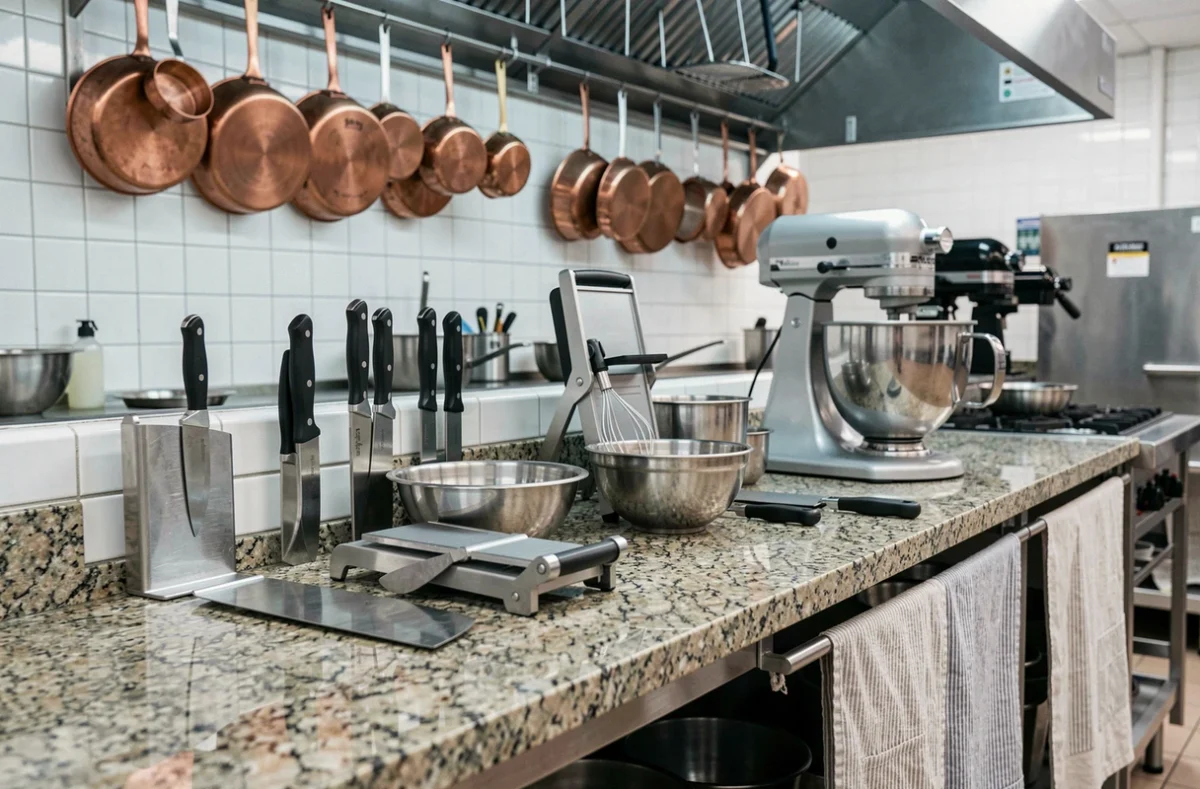
The sizing of a professional kitchen is not just a shopping list. Each piece of equipment interacts with fire safety constraints, European hygiene standards, and the production flow. Here, we detail the technical points that truly determine the performance of an installation, beyond generic inventories.
Power Threshold and Fire Safety in Professional Kitchens
The threshold of 20 kW of cumulative useful power radically changes the regulatory framework. In a public establishment, as soon as cooking appliances reach this power, the kitchen falls under the regime of large kitchens. The requirements then focus on dedicated mechanical extraction, accessible ducts for inspection, centralized emergency shut-off, and enhanced fire protection.
This threshold directly influences the choice of cooking equipment. A high-capacity combi oven combined with a gas stove may be enough to exceed the limit. We recommend calculating the cumulative useful power before any order, as exceeding it involves significant compliance work: building penetrations, adapted false ceilings, dedicated ducts.
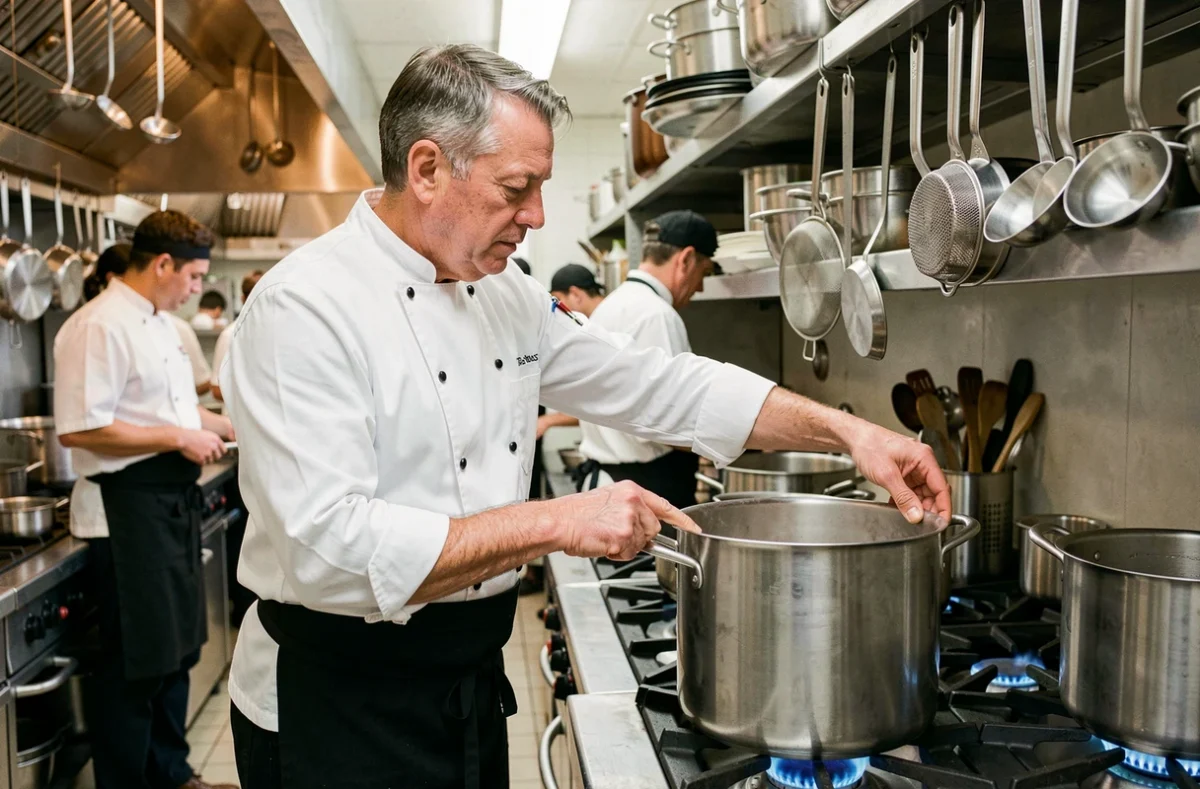
Extraction is not limited to a hood placed above the cooking range. The ducts must remain accessible along their entire length to allow for cleaning and inspection. Grease filters require cleaning or replacement at least weekly, and the flue cleaning of exhaust ducts must be performed at least once a year. Each intervention must be recorded in the establishment’s maintenance log.
Ignoring these obligations exposes one to non-compliance during safety commission visits, with a risk of administrative closure.
Temperature Traceability: Kitchen Equipment and Regulatory Proof
The European hygiene regulation requires operators to prove temperature control, not just to achieve it. Specifically, each refrigeration and cooking equipment must allow for verifiable recording of temperature data.
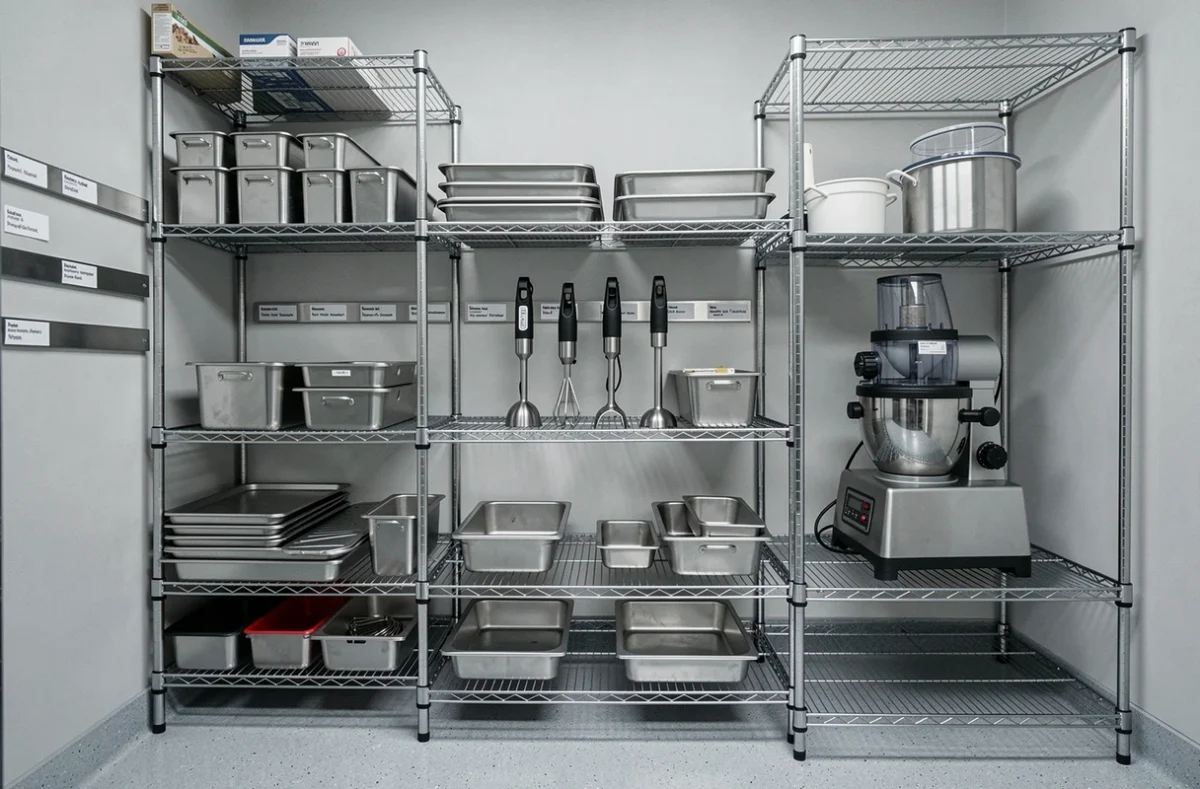
For refrigeration, this means prioritizing refrigerated cabinets and blast chillers equipped with connected probes or, failing that, time-stamped manual readings. Stainless steel gastronorm containers facilitate rapid temperature drop due to their thermal conductivity, but the choice of material alone is not enough: it is the combination of container and equipment that ensures compliance with the cold chain.
In cooking, ovens equipped with programmable core probes simplify traceability. We observe that establishments investing in equipment with automatic recording significantly reduce the time spent on manual HACCP readings. The catalog of equipment offered by La Cigale et la Fourchette particularly covers this type of equipment suitable for traceability requirements.
Stainless Steel Equipment and Workflow in Catering
304 stainless steel (18/10) remains the standard for work tables, sinks, and professional kitchen furniture. Its resistance to corrosion and ease of cleaning make it a technical choice, not an aesthetic one. However, the arrangement of workstations conditions productivity more than the individual quality of each piece of furniture.
An efficient workflow follows a linear or U-shaped logic:
- Receiving and cold/dry storage area, physically separated from the preparation area to avoid cross-contamination
- Preparation station with stainless steel tables, color-coded cutting boards, and direct access to gastronorm containers
- Cooking area grouping stove, oven, fryer, and plancha, positioned under mechanical extraction
- Washing and dishwashing area at the end of the circuit, with separation of clean and dirty dishes
This diagram is not theoretical. The forward flow, imposed by health regulations, dictates the placement of each piece of equipment. Buying high-performance equipment but installing it in an incoherent layout negates operational benefits.
Sizing the Equipment Budget According to Restaurant Cadence
The equipment budget varies according to the number of covers per service, the type of menu, and the production method. A high-cadence establishment needs equipment capable of supporting continuous operation without loss of performance.
The items that absorb the largest share of the budget are, in order: refrigeration (cabinets, blast chillers, refrigerated furniture), cooking (combi oven, stove, fryer), and washing (hood or tunnel dishwasher depending on volume). Stainless steel tables, gastronorm containers, and small equipment represent a smaller share but can generate additional costs if the initial sizing is underestimated.
We recommend checking three criteria before purchase:
- The useful power of each device and its impact on the fire safety regulatory threshold
- The gastronorm compatibility (containers, grids, supports) between different pieces of equipment to avoid format duplicates
- The availability of spare parts and on-site service coverage, as a broken oven during service costs much more than a maintenance contract
Gas or Electric Cooking: A Technical Decision
The choice between gas and electric does not depend on the chef’s preference. It depends on the power available on-site, local energy costs, and extraction constraints. A gas stove offers superior thermal responsiveness but increases ventilation requirements. An electric convection oven simplifies installation while ensuring even cooking.
In both cases, energy consumption must be evaluated over the complete cycle of a service, not just based on the nominal power of the device.
The last point not to be underestimated concerns preventive maintenance. Filters, seals, probes, and heating elements are consumables. Planning their replacement in the annual budget avoids unplanned downtime and maintains health compliance throughout operation.