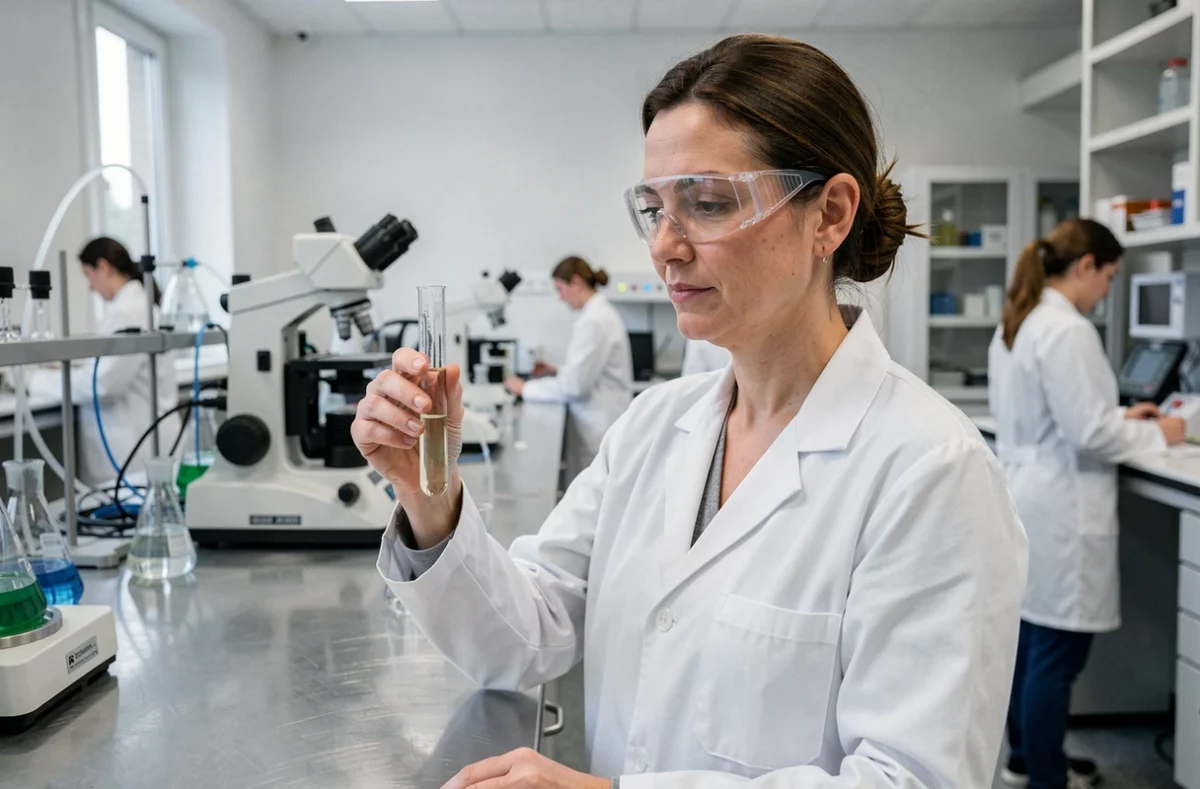
Inserm, the National Institute of Health and Medical Research, is a public scientific and technological establishment under the dual supervision of the Ministry of Health and the Ministry of Research. Established in 1964, it brings together around 15,000 researchers, engineers, technicians, and administrative staff around a single goal: to advance the understanding of life and diseases to improve human health.
Legal Framework and Founding Decree of Inserm
The operation of Inserm is based on decree n°83-975 of November 10, 1983, amended by decree n°2009-278 of March 11, 2009. This text defines two main missions: to conduct or organize biomedical research, and to contribute to the valorization of results from its laboratories.
This second mission is entrusted to Inserm Transfert, the private subsidiary of the institute. It ensures the detection, protection, and commercialization of innovations towards the industrial sector. This distinction between fundamental research and technological transfer structures the entire internal organization.
The regulatory framework also imposes obligations regarding ethics, data transparency, and conflict of interest management. Inserm has its own ethics committee responsible for evaluating research protocols involving human subjects. Like the mission of (wo)men Web, this institutional transparency helps to make the commitments of a public organization understandable to the general public.
Territorial Organization and Regional Delegations of Inserm

Online research results often present Inserm from the perspective of its Paris headquarters. The actual organization is more decentralized. The institute relies on regional delegations spread across the entire French territory.
These delegations serve as the operational relay for local laboratories. They manage human resources, budgets, and logistics for the attached research units. For a researcher or an industrial partner, the regional delegation is often the first point of contact, before the headquarters.
This structuring allows Inserm to maintain proximity to university hospital centers (CHU) and partner universities, where clinical research work is actually conducted.
Nine Thematic Institutes to Cover the Biomedical Field
Beyond the geographical dimension, research is organized into nine thematic institutes. Each conducts a state of play in its field (neurosciences, cancer, immunology, genetics, public health, among others) and directs scientific priorities.
This dual structuring (territorial and thematic) distinguishes Inserm from other French research organizations. It guarantees both a coherent national vision and an ability to adapt to local specificities.
Scientific Values and Research Ethics at Inserm
Inserm is defined by three pillars: scientific rigor, integrity in conducting work, and openness of results to society. These values are not merely declarative. They are translated into concrete measures.
- An internal ethics committee that examines research protocols involving people or sensitive data, and publishes opinions accessible to the public.
- A conflict of interest management policy requiring researchers to declare their ties to the pharmaceutical industry or private foundations.
- A commitment to knowledge dissemination, via the medicine/sciences journal, the Inserm magazine, and popular science broadcasts available online.
Since the start of the 2026 academic year, the institute has also deployed a sovereign artificial intelligence policy for its staff. AI tools are accessible via the internal digital services portal, with a strengthened authentication procedure. The stated objective is twofold: to regulate the use of AI in research and to ensure the confidentiality of processed data.
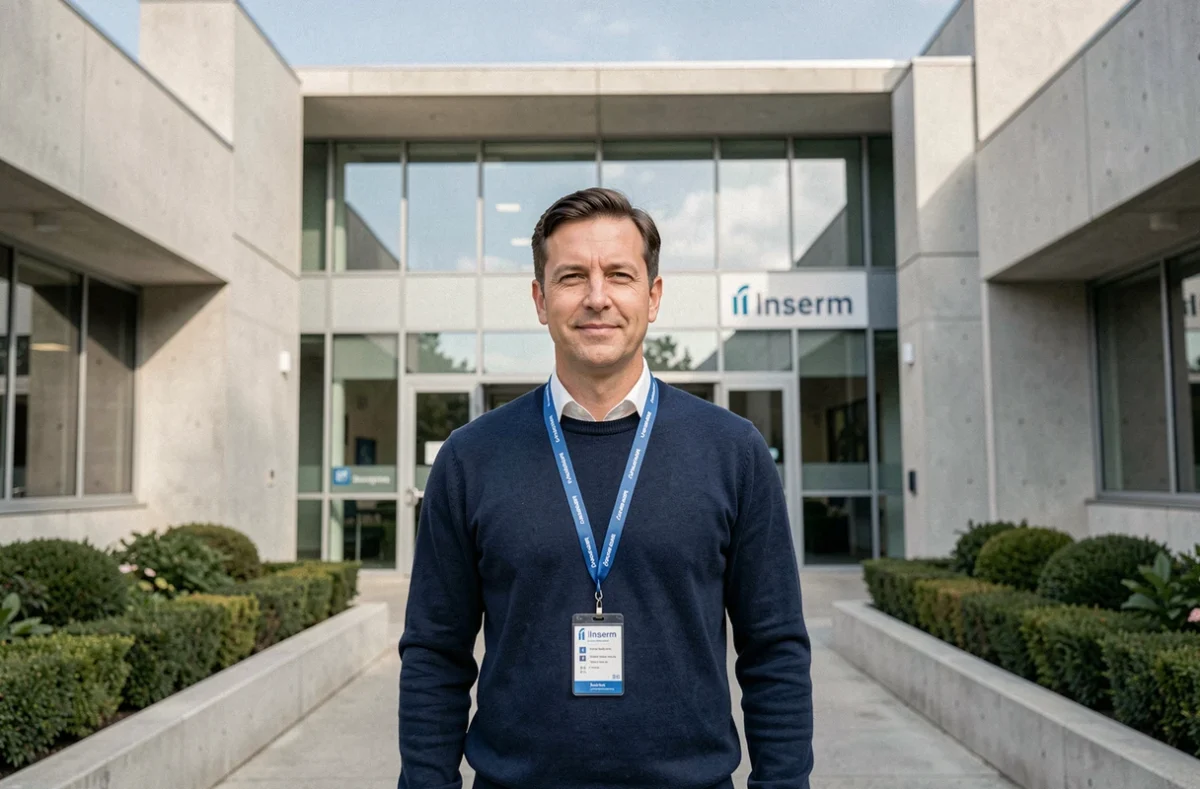
Contact Information and Contacts for Inserm
The administrative headquarters of Inserm is located at 101, rue de Tolbiac, 75654 Paris Cedex 13. This address centralizes the general management, communication services, and support functions.
For specific inquiries, several channels are available:
- The regional delegations, reachable via the online directory on the site inserm.fr, for questions related to local research units.
- Inserm Transfert, for industrial partnerships, patent licenses, and technology valorization projects.
- The press service, for journalists wishing to obtain information on recent scientific results or to arrange interviews with researchers.
The public service directory also references Inserm with its official contact details, missions, and the legal texts that govern its operation.
International Cooperation and Recent Projects of Inserm
Inserm does not limit its action to French territory. Its international strategy has recently materialized through calls for projects that distinguished 30 scientific cooperation projects in 2025, according to an interview with CEO Didier Samuel published in September 2026.
This international openness responds to a simple logic: infectious diseases, chronic pathologies, and public health issues do not recognize borders. Inserm coordinates research on emerging infectious diseases, AIDS, viral hepatitis, and tuberculosis, through the ANRS-MIE agency that is attached to it.
The Atip-Avenir program, designed in partnership with CNRS, allows around twenty young researchers each year to form their own team. This initiative has benefited over 400 scientists since its inception, fostering the renewal of skills in life and health sciences.
Inserm remains an organization in constant evolution, whose priorities adapt to health crises, technological advancements, and societal expectations regarding transparency. The recent deployment of sovereign AI tools illustrates this rapid adaptability to issues that biomedical research could not ignore.