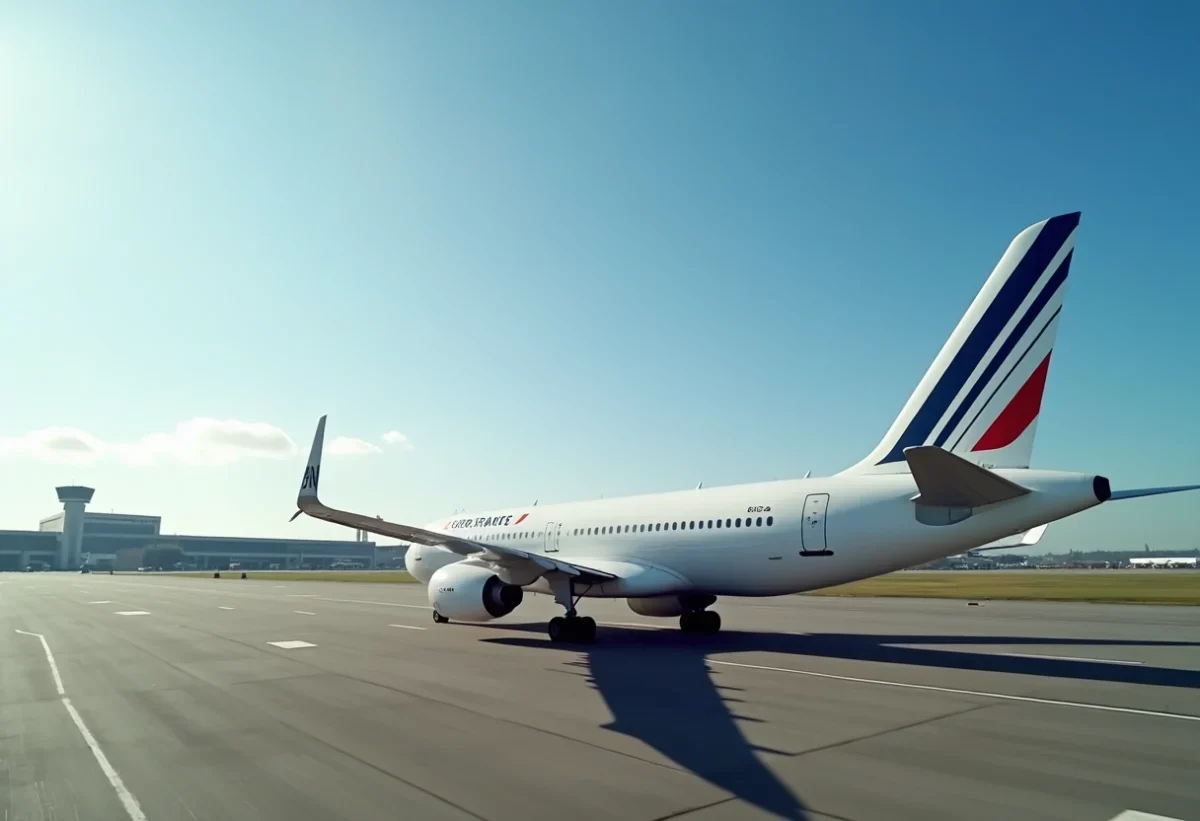
The aviation sector is undergoing a true transformation thanks to technological advancements, and the Digital Piezoelectric Intelligence (DPI) is a perfect example of this. Air France, in particular, is fully leveraging this innovation to optimize its operations and enhance the passenger experience.
The DPI allows for more precise real-time data management, from predictive maintenance of aircraft to flight route optimization. With this technology, Air France is not only managing to reduce its operational costs but also to enhance the safety and comfort of its travelers. A true revolution in the skies.
The concept of DPI at Air France: a revolution in air transport
The DPI, or Innovation Performance Network, represents a major advancement for civil aviation. Launched by Air France, this system aims to improve passenger experience and flight efficiency. Based on piezoelectric sensors integrated into the aircraft, the DPI collects and analyzes a set of key data in real time.
The concrete benefits of DPI Air France
Three main areas illustrate how the DPI is revolutionizing air transport at Air France:
- Predictive maintenance: through continuous monitoring of aircraft components, maintenance teams can anticipate failures before they occur, thus reducing delays and repair costs.
- Flight route optimization: real-time analysis of weather conditions and air traffic allows for the definition of the most efficient routes, saving fuel and reducing CO2 emissions.
- Improvement of passenger experience: collecting data on passenger preferences and flight conditions enables the provision of personalized, high-quality service.
Air France, a pioneer in aviation innovation
Since its founding in 1933 by Henry Potez, Air France has always been at the forefront of innovation. By merging with KLM in 2004, the airline strengthened its capabilities and expanded its network. Utilizing aircraft such as the Airbus A350 and the Boeing 787 Dreamliner, Air France continuously integrates cutting-edge technologies. The DPI Air France embodies this tradition of excellence and modernization.
By integrating these technologies, Air France not only optimizes its operations but also lays the groundwork for a new era in the travel industry. The fusion of data, real-time analysis, and advanced sensors illustrates how innovation can transform a historic company into a modern leader in aviation. 
The benefits of DPI for passengers and the travel industry
The DPI, at the heart of Air France’s strategy, is radically transforming the landscape of civil aviation. For passengers, the advantages are multiple and tangible. First and foremost, the DPI allows for the personalization of the flight experience. By collecting precise data on passenger preferences, Air France can offer services tailored to each individual, thereby enhancing customer satisfaction.
- Increased comfort: data on passenger preferences allows for personalized seating, specific meals, and tailored entertainment options.
- Reduction of delays: thanks to predictive maintenance, failures are anticipated and interventions are planned proactively, thus minimizing service interruptions.
For the travel industry, Air France’s DPI represents a decisive advancement. Gains in operational efficiency translate into cost reductions and better resource management. The ability to optimize flight routes reduces fuel consumption, which is beneficial both economically and environmentally.
Impact on the travel industry
The benefits of the DPI extend well beyond the passengers. The civil aviation sector as a whole also benefits from it. By integrating this technology, Air France contributes to:
- Reduction of CO2 emissions: optimizing flight routes leads to a significant decrease in carbon footprint.
- Improvement of safety: continuous monitoring of aircraft components through piezoelectric sensors enhances flight safety.
The DPI of Air France not only improves the passenger experience. It redefines the standards of the travel industry by combining technological innovation and operational performance.