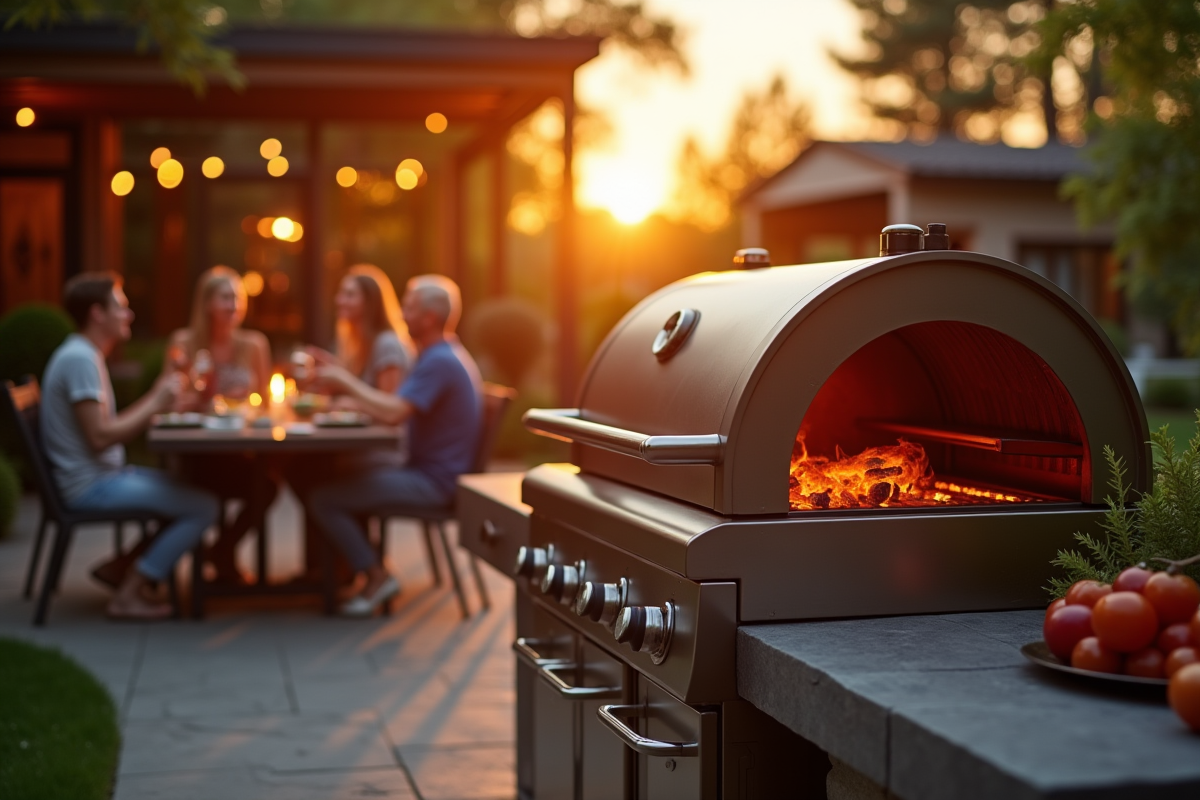
The pleasures of the table are deeply rooted in French culture, and the art of outdoor cooking holds a special place in the hearts of food lovers. The barbecue brazier, a reimagined ancestral concept, brings together these two passions in a perfect symbiosis of conviviality and authentic flavors. A true culinary phenomenon, it transcends seasons and generations, bringing warmth and comfort to every shared meal. The barbecue brazier, combining rustic simplicity with modern functionalities, stands as an invitation to savor unforgettable moments around the fire, with family or friends.
Origins and evolution of the barbecue brazier
The brazier, an outdoor heating element that has become a cooking instrument, finds its roots in ancient history, evolving over the centuries to become a centerpiece of many culinary cultures.
- Ancient origins: Originally used as a source of heat by Mediterranean peoples, the brazier primarily served to warm outdoor spaces. Its simple structure, often a bowl made of metal or terracotta, allowed for safe containment of the fire.
- Culinary evolution: Over time, this primitive device was adapted for cooking, adding a grill above the container to roast meats and vegetables. Its use spread in South American cultures, where it became a symbol of conviviality during communal meals.
- The modern revival: Today, the barbecue brazier combines contemporary design with thermal efficiency, often incorporating innovative materials like stainless steel for enhanced durability. It fits perfectly into the current trend of returning to roots and respecting the environment.
Features and benefits of the barbecue brazier
The barbecue brazier is appealing for its multiple advantages, combining practicality, aesthetics, and remarkable culinary performance.
First of all, its design allows for even heat distribution, ensuring uniform cooking of food. Modern models are often equipped with adjustable ventilation systems, allowing for precise temperature control. Furthermore, the barbecue brazier stands out for its ability to create a truly warm and welcoming atmosphere. Its dancing flame becomes the heart of the evening, bringing guests together around enveloping warmth.
Moreover, its refined aesthetics contribute to beautifying outdoor spaces. Whether installed on a modern terrace or in a rustic garden, the barbecue brazier harmoniously integrates into all decors, adding a touch of elegance and authenticity.
Finally, it offers culinary versatility that allows for varied pleasures: classic grilling, slow cooking, or even smoking food for unique flavors. It is a true asset for gastronomy enthusiasts in search of new taste experiences.
Tips for choosing and using a barbecue brazier
Choosing a barbecue brazier requires considering several criteria to ensure an optimal and safe culinary experience.
First and foremost, it is essential to determine the ideal location. An open area, sheltered from the wind and away from flammable materials, ensures safe use. Also, consider choosing a model suited to your needs, taking into account the size of the grill and the capacity of the fire pit according to the usual number of guests.
- Materials and maintenance: Prefer braziers made of stainless steel or cast iron for their resistance to the elements. Regular maintenance, including cleaning out ashes and checking the grill, prolongs its lifespan.
- Essential accessories: Adding accessories like a smoking dome or a cooking plate expands culinary possibilities. A protective cover is also recommended to preserve the device between uses.
- Usage tips: To safely light the brazier, use natural fire starters and avoid chemical products. Fire management is crucial: start with small logs before adding larger pieces once the fire is well established.