A 67-year-old neighbor slips on the wet bathroom tiles one November morning. A hip fracture, three weeks in hospital, six months of rehabilitation. Santé publique France has documented this scenario, reporting an increase in hospital admissions related to falls between 2019 and 2024. Healthy aging after 60 often starts with a household detail we keep putting off: an uninstalled grab bar, a loose rug, a poorly lit hallway.
Falls at home after 60: a risk that health checkups don’t cover
Preventive health checkups for older adults focus on screening for chronic diseases, blood pressure and blood sugar. The home, however, remains a blind spot. People rarely check whether the night-light between the bedroom and bathroom works, or whether the shower threshold is more than five centimeters high.
Santé publique France confirms that hospital admissions for falls among older adults are increasing despite prevention campaigns. The problem isn’t a lack of physical activity (although it matters), but the gap between general advice and the reality of a home someone has lived in for twenty years, where the furniture, habits and flooring have stayed the same.
Before thinking about supplements or an exercise program, it’s worth taking a fresh, critical look around the home. Three areas account for most accidents: the bathroom (slippery floors, high-sided bathtubs), the stairs (missing or unstable handrails) and the kitchen (high cupboards that mean climbing onto a stool).
For more on this topic, Astelos Senior’s advice for older adults covers practical situations related to adapting everyday life.
Financial assistance for home adaptations is available (including MaPrimeAdapt’), but you need to apply before an accident happens. Starting the work before the first fall can dramatically improve the outlook for maintaining independence.
Physical activity after 60: what protects your balance, not just your heart
Walking remains the most common recommendation, and for good reason. You don’t need any equipment, you can adjust the effort, and it gets you out of the house. The problem arises when walking becomes your only form of physical activity, because it doesn’t specifically train balance or leg strength.
After 60, muscle loss (sarcopenia) accelerates. The muscles that stabilize the ankle and knee weaken, increasing the risk of falling even for someone who walks for thirty minutes a day. It’s therefore a good idea to combine walking with specific exercises.
- Stand up from a chair without using your hands, ten times in a row, two to three times a week: this exercise works the quadriceps and glutes, the two muscle groups that help prevent a fall when you trip.
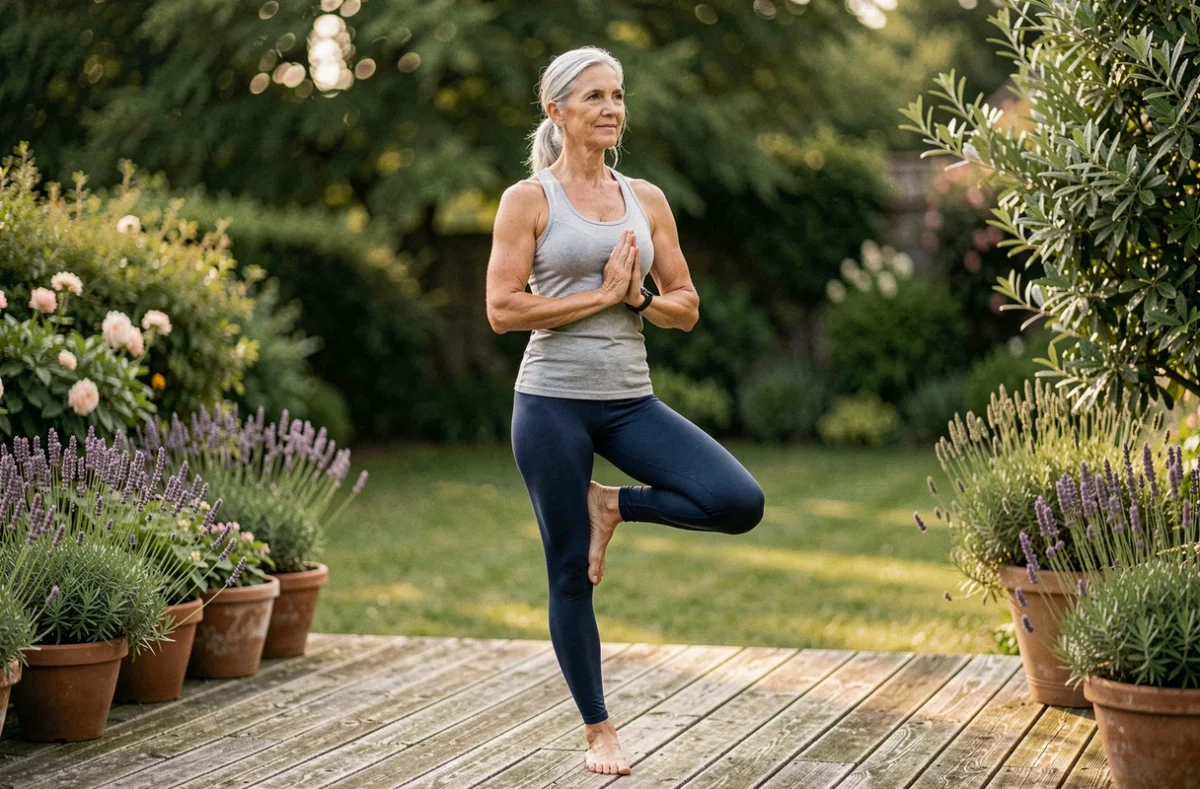
- Balance on one foot for fifteen seconds (holding onto the countertop if needed): this trains the ankle’s proprioceptive receptors, which often become less responsive after 65.
- Walk up and down a flight of stairs slowly, controlling each step: this is more effective for fall prevention than walking on flat, even ground.
The goal isn’t cardiovascular performance, but being able to catch yourself when your foot catches on a curb or slips on a wet floor. Tailoring your physical activity program to this goal changes the kinds of exercises you choose.
Nutrition and preventing deficiencies: beyond the Mediterranean diet
The Mediterranean diet comes up in every article about healthy aging. Fruit, vegetables, fish, olive oil: we know the list. What gets less attention is the practical challenge of maintaining adequate protein intake after 60.
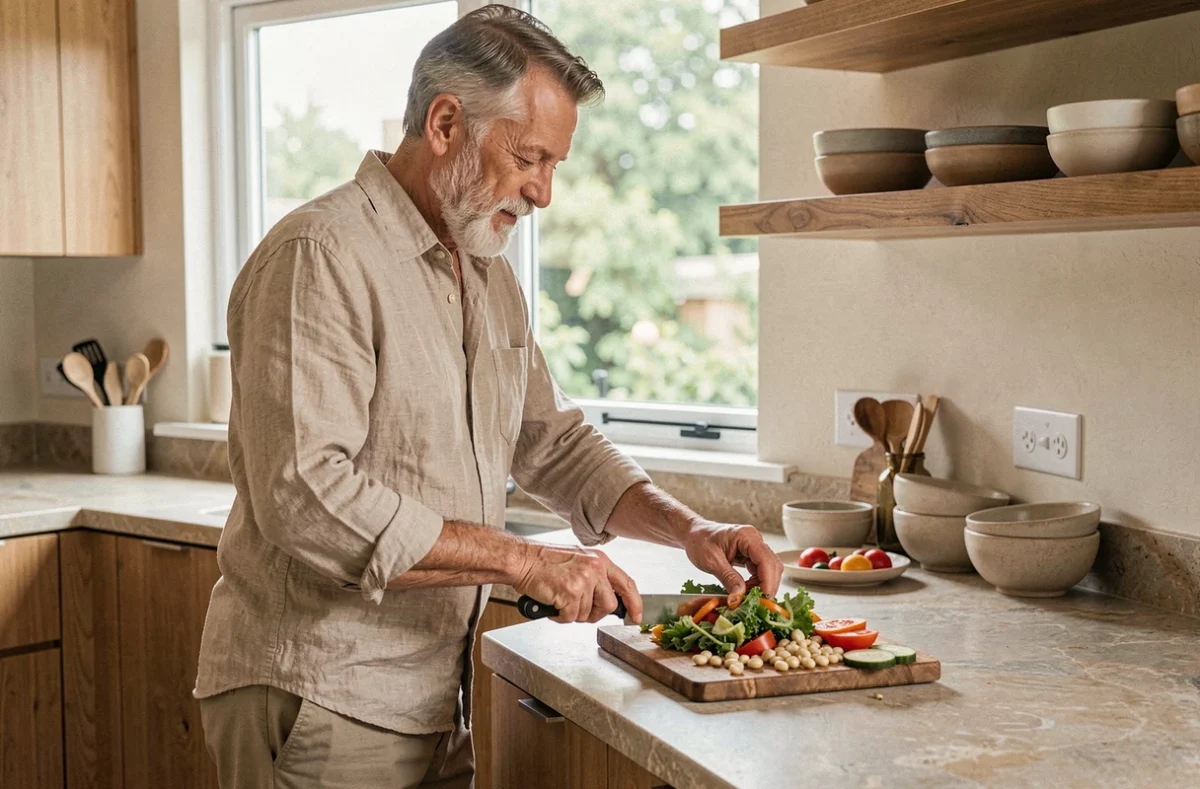
Appetite decreases with age. Meals get shorter, portions get smaller, and protein-rich foods (meat, fish, eggs, legumes) are often the first to go because they take more preparation. The direct consequence: not getting enough protein accelerates muscle loss and makes it harder to recover from even minor exertion or an incident.
A practical approach is to spread protein across all three meals rather than concentrating it at dinner. An egg at breakfast, lentils or cheese at lunch, fish in the evening: this distribution supports better muscle protein synthesis throughout the day.
Sleep also directly affects quality of life and the ability to recover. Fragmented sleep, which is common after 60, reduces the secretion of hormones involved in muscle repair and memory consolidation. Keeping a regular bedtime has a greater impact on sleep quality than the total time spent in bed.
Vaccinations after 60: a broader schedule than just flu and Covid
Most older adults know about the annual flu and Covid-19 vaccination campaigns. What’s less widely known is that the vaccination schedule for people over 60 includes other protections that are often overlooked.
Santé publique France says healthcare professionals should more routinely offer shingles and pneumococcal vaccinations to eligible people. Shingles in particular can cause nerve pain that lasts for months and significantly affects day-to-day independence.
Vaccination against RSV (respiratory syncytial virus) is now recommended for people aged 75 and over, as well as those aged 65 and over with certain medical conditions.
This virus, long associated only with infants, can cause serious respiratory infections in older adults, with a risk of hospitalization comparable to that of the flu. Vaccination rates for RSV and shingles remain low, often because neither the patient nor the doctor thinks to bring them up during a routine appointment.
- Check with your doctor or pharmacist whether you’re up to date on shingles, pneumococcal and RSV vaccinations, in addition to flu and Covid.
- Ask about them explicitly at your next appointment: healthcare professionals don’t always bring up these vaccinations themselves.
- Plan these vaccinations before age 75 if you have respiratory or immune-related risk factors.
Vaccination is an integral part of maintaining independence after 60, alongside physical activity and nutrition. A serious infection in someone over 70 often sets off a chain reaction: hospitalization, muscle loss, disorientation and difficulty returning to their previous level of independence. Every missed vaccination adds another risk of disrupting a balance of health built through everyday choices.